
Suscribirse a Noticias - Cámaras
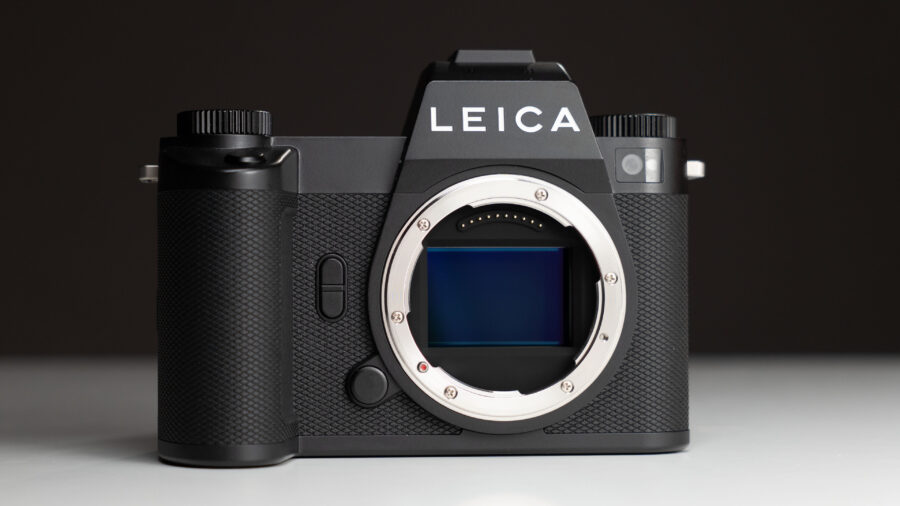
Leica has unveiled the SL3-P, positioned as the brand’s most comprehensive full-frame camera to date and the most video-capable body the SL-System has ever offered. It pairs a new 44-megapixel BSI full-frame sensor with a new hybrid autofocus system, internal recording up to 8K Open Gate in 3:2, Apple ProRes up to 5.8K, anamorphic support, false color, and two new L-Log Cinema Looks, all wrapped in a deliberately minimalist, logo-free German-made body with IP54 weather sealing. Our camera lab test is here, and the full review is here. For the official full camera specification PDF, please click here.
For Leica’s SL line, this is the moment when the photo-first DNA and useful “cinema features set” finally land in a single body rather than being split between the high-resolution SL3 and the video-centric SL3-S (review here). The pitch is unambiguous: one camera for hybrid shooters who do not want to choose between a high-resolution stills tool and a capable video instrument. Leica is launching the SL3-P alongside two new lenses, the Summilux-SL 50 f/1.4 ASPH. and the APO-Macro-Elmarit-SL 100 f/2.8, broadening the native glass options for the L-Mount platform.
A new 44MP sensor and revised hybrid autofocus
At the core of the SL3-P sits a new 44-megapixel BSI full-frame sensor, a different resolution point from both the 60MP SL3 and the 24.6MP SL3-S, landing closer to the territory of the Panasonic LUMIX S1RII, which also uses a 44MP full-frame sensor. Leica rates the SL3-P at up to 14 stops of dynamic range, with a native ISO range from 50 to 200,000. A Multishot mode produces extremely detailed composite images of up to 176 megapixels for stills work that demands maximum resolution.
The autofocus system combines three technologies: phase detection, depth mapping via object detection, and contrast detection. Leica quotes 819 AF points, smart subject recognition, and continuous shooting at up to 40 frames per second with full autofocus support. That burst figure is a meaningful step up for the SL family and signals that the SL3-P is meant to handle fast, unpredictable subjects rather than just controlled studio work. We covered the original 60MP SL3 when it launched, and you can read our Leica SL3 announcement coverage here for the wider context of where this body fits.
What the video toolkit actually covers
Video is where the SL3-P stretches furthest. The camera records internally up to 8K, including 8K Open Gate in the full 3:2 sensor area at up to 24p, plus 8K at 30p and HDMI RAW 8K Open Gate output. For smoother motion, it offers 5.9K at up to 60 frames per second, and 4K at 120p using the full width of the sensor for slow motion. Apple ProRes is integrated up to 5.8K, recorded internally to CFexpress, which puts genuinely high-bitrate acquisition inside a stills-first Leica body.
The detailed specification sheet fills out the picture further. In MOV, the camera offers a wide spread of resolutions including C8K (8128 x 4288, 17:9), 7.2K and 6.4K Open Gate in 3:2, 6K and C6K, 4.7K in 4:3 (4736 x 3552) for anamorphic capture, and C4K up to 120p, with codec choices spanning 4:2:0 10-bit LongGOP HEVC, 4:2:2 10-bit ALL-I H.264, and ProRes 422 HQ at the higher end. HDMI RAW output reaches 8K Open Gate (8128 x 5418, 3:2) at 23.98p alongside C8K, 7.2K, and 4.8K options. Worth flagging for planning purposes: at several of the highest-quality modes, the readout notes indicate that autofocus detection and tracking are restricted, and that HDMI output drops to FHD when certain high-bitrate or external-recorder workflows are engaged.
For monitoring and exposure on real shoots, Leica includes false color, anamorphic de-squeeze support, assignable controls, and the in-body stabilization that has become central to the SL line. The combination of false color, anamorphic monitoring, strong IBIS, and assignable buttons is squarely aimed at small crews and solo operators who need production tools without a dedicated “cinema body”. This is a familiar trajectory for the SL family: many of these capabilities, including 3:2 Open Gate, Camera-to-Cloud, and AI autofocus, arrived on the existing cameras through the substantial SL3 and SL3-S firmware 4.0 update at the end of 2025, and earlier through the v3.1.1 firmware that added C4K and C6K formats to the SL3.
Cinema Looks, L-Log, and verified dynamic range
The SL3-P ships with two new in-camera LUTs for the L-Log color space: Leica Pure and Leica Cine. The idea behind Pure is a very natural, minimal image intended as a clean foundation for grading or immediate export, while Cine delivers a stronger, more classic cinematic look. Both are supplied as 33-point LUTs that load into the camera via the custom LUT slot in the L-Log settings, and once installed, they need to be activated in the LUT Profile menu. Leica also provides 65-point versions intended for post-production use. According to Leica, these Cinema Looks will additionally be released for the stills side of the camera as a Leica Look, installable through the Leica FOTOS app. One current limitation to note: the looks cannot be baked into the footage while filming, so they need to be applied in editing for now.
Leica’s Dynamic Range Boost works at ISO 200 and 800 with the feature off, and at ISO 400 and 1600 with it on. With DR Boost off, the SL3-P measured 12.2 stops at ISO 800 for a signal-to-noise ratio of 2 (13.3 stops at SNR = 1). With DR Boost on, it reached 12.6 stops at ISO 1600 at SNR = 2 (13.8 stops at SNR = 1), with ISO 200 and ISO 400 returning 11.5 and 11.7 stops, respectively at SNR = 2.
For comparison, our own Panasonic LUMIX S1RII lab test measured around 12 stops at SNR = 2 and nine usable stops of exposure latitude, with notably high rolling shutter values in its highest-quality 8K mode. The SL3-P’s best SNR = 2 reading edges ahead of that, which substantiates Leica’s positioning rather than leaving it as an unverified marketing line. Please head to our full lab test covering rolling shutter and exposure latitude here.
Design, build, and the deliberately reduced interface
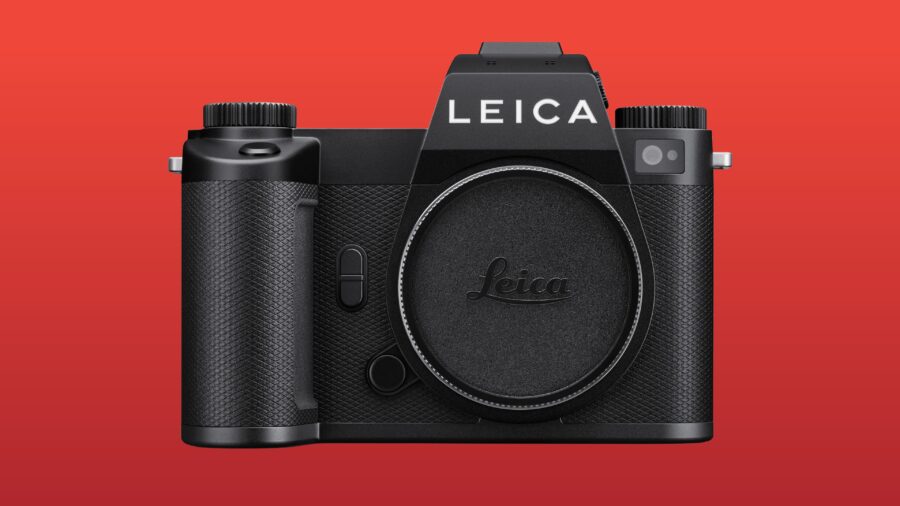
Manufactured in Germany, the SL3-P carries a deliberately minimalist design with black control elements and, notably, without the red Leica logo, a discreet aesthetic that echoes the reasoning behind the SL3 Reporter variant Leica introduced for fieldwork. The full-metal body is IP54 certified against dust and water splashes, and the L-Mount keeps the camera compatible with the wide range of L-Mount Alliance glass. Leica describes the build and weather sealing as industry-leading, with the wider point being a tool reliable enough for demanding real-world shooting rather than only controlled environments.
The user interface strictly separates photo and video modes, using a color code of red for photos and yellow for video, and the high-resolution tilting screen reorients its display between vertical and horizontal positions. Leica is candid that its reduced menu philosophy is a deliberate choice, and the company says much of its feedback, including from users switching brands, favors that simpler approach over deeper, more complex menu structures elsewhere. It is a polarizing stance, and whether the streamlined UI helps or hinders on a busy set tends to depend on how much granular control a given operator wants.
Connectivity and workflow
The SL3-P leans on the Leica FOTOS app over Wi-Fi, Bluetooth, and USB-C for fast transfer of DNG, JPG, and video files plus full remote control. Leica Looks can be applied at the moment the shutter is released and adjusted in intensity either in-camera or later in the app. Native tethering supports Lightroom Classic and Capture One, and Camera-to-Cloud via Adobe Frame.io sends photos and videos straight to the cloud for immediate post-production access. The camera also includes Content Credentials technology developed in line with the Content Authenticity Initiative, allowing images to be signed with tamper-proof metadata to help protect authorship. Regular firmware updates delivered through Leica FOTOS round out a system that Leica frames as a long-term, future-proof investment.
Two new SL lenses join the launch
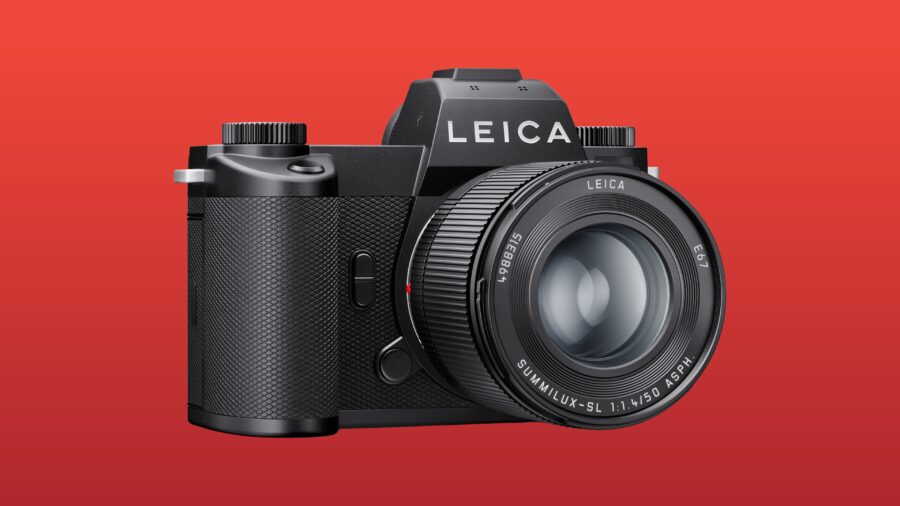
Alongside the body, Leica introduced the Summilux-SL 50 f/1.4 ASPH., which the company calls the world’s most compact autofocus lens at this focal length and aperture. It measures 74mm in diameter and 75.5mm in length, weighs 584g, and uses 11 aperture blades, two aspherical elements, an E67 filter thread, and a 50cm close-focus distance, with IP54 sealing and an AquaDura coating.
The second lens, the APO-Macro-Elmarit-SL 100 f/2.8, revives the name of Leica’s 1987 APO-Macro-Elmarit-R 100 f/2.8. It offers apochromatic correction, a 30cm close-focus distance, and a 1:1 maximum reproduction ratio, doubling as a short telephoto for portraiture. It uses an eight-blade aperture, measures 137.6mm long, weighs 862g including the supplied hood, and shares the E67 filter thread and AquaDura coating.
Pricing and availability
The Leica SL3-P is available worldwide from today, June 25, 2026 at a recommended retail price of €5,990.00 including VAT. Leica is also offering three launch kits: the SL3-P 28–70 Vario Kit at €6,990.00 with the Vario-Elmarit-SL 28–70 f/2.8 ASPH.; the SL3-P 24–70 Vario Kit at €7,490.00 with the Vario-Elmarit-SL 24–70 f/2.8 ASPH.; and the SL3-P 24–70 & 70–200 Vario Kit at €9,790.00 with both the 24–70 f/2.8 and the 70–200 f/2.8. Both new lenses will arrive worldwide from the end of 2026, with the Summilux-SL 50 f/1.4 ASPH. at €4,500.00 and the APO-Macro-Elmarit-SL 100 f/2.8 at €2,450.00, all including VAT. For full details, see the Leica website.
Is this the allarounder Leica camera you have been waiting for? Can you justify the extra money when compared to the Panasonic LUMIX S1R II? Don’t hesitate to let us know in the comments below!